

What Bees Make Mad Honey?
Mad honey is produced primarily by Apis laboriosa, the giant Himalayan cliff bee. These bees forage on high-altitude rhododendron flowers above 8,000 feet, where nectar carries naturally occurring grayanotoxins. Elevation, geography, and wild harvesting define authenticity.
If you understand that, the rest starts to make sense:
- The Himalayas are where authentic mad honey is most consistently found
- Elevation above 8,000 feet is what gives it its character
- The same flowers at lower altitudes don’t produce the same effect
- Nepal’s high-altitude regions have become the benchmark for quality
- Where it’s harvested shapes how it feels just as much as how much you take
That difference shows up the moment you try it. Two jars can look identical and feel completely different.
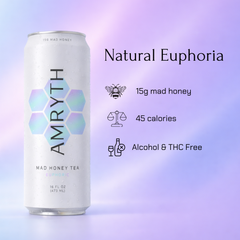
Amryth takes that variability and smooths it out. You open a can, and the experience builds the way it’s meant to, grounded in the same high-altitude sourcing that gives mad honey its character.
If you want to understand how the bee, the flower, and the mountain all shape the experience, keep reading.
Meet Apis Laboriosa: The Giant Himalayan Bee
Apis laboriosa is the largest honey bee species in the world. It lives high in the Himalayan mountains, building massive hives beneath overhanging cliff faces at elevations between roughly 8,000 and 10,000 feet, sometimes foraging even higher.
Its body is built for thin air and cold temperatures. Its wings carry it across terrain where most bees cannot operate.
That environment shapes everything.
Standard honeybees such as Apis mellifera, the species used in commercial beekeeping worldwide, produce excellent honey. They do not produce mad honey with meaningful grayanotoxin concentration because they do not forage in the same conditions.
Altitude and behavior define the difference.
Why Rhododendron Nectar Matters
The bee alone does not create the effect. The flower does.
High-altitude rhododendron species produce naturally occurring compounds called grayanotoxins. These compounds exist throughout the plant, including in the nectar. When Apis laboriosa forages on dense stands of these flowers during peak bloom, the nectar it collects carries those compounds directly into the hive.
The bees process the nectar into honey. The grayanotoxins remain chemically stable throughout that transformation.
The activity begins in the flower. The bee transfers it. The honey preserves it.
This chain only works in the right geography.
The 8,000-Foot Threshold
Elevation changes plant chemistry.
Above roughly 8,000 feet, rhododendron stands grow in concentrated patches under harsher environmental conditions. These plants produce more intense defensive compounds. Nectar from these blooms carries higher grayanotoxin concentration.
Apis laboriosa nests in this range. Its entire lifecycle revolves around these elevations.
Lower-altitude rhododendrons produce milder nectar chemistry. Bees operating at those levels create honey that tastes pleasant but lacks the same potency.
When you see mad honey advertised without elevation transparency, that detail matters. The mountain writes the chemistry long before the jar exists.
Cliff Hives and Natural Rarity
Apis laboriosa builds its hives directly onto vertical cliff faces. The combs hang like golden curtains beneath rock overhangs, exposed to wind and weather.
Harvesting these hives requires rope systems, ladders, and generational knowledge passed down within Himalayan communities. There is no industrial shortcut. There is no scalable farm version of this environment.
Scarcity comes from geography and labor. This is why authentic mad honey appears in limited quantities each season. The bees choose the cliffs. Humans follow carefully.
Nepal and the Black Sea Region
Two primary regions consistently produce authentic mad honey:
- The high Himalayan valleys of Nepal
- The Black Sea region of Turkey
Both regions share the essential elements: dense rhododendron populations at high altitude and established colonies of Apis laboriosa.
Nepal’s extreme elevations and traditional cliff harvesting methods have become the most recognized source. Turkish mad honey from sufficient altitude carries similar chemistry when sourced properly.
Geographic transparency is a meaningful quality signal.
From Bee to Experience
Understanding which bees make mad honey changes how you think about potency.
Grayanotoxin concentration varies from harvest to harvest. Seasonal rainfall, bloom density, and how long bees forage on rhododendrons all influence strength.
When you consume authentic high-altitude mad honey, onset typically begins within 30 to 90 minutes. Warmth spreads first. Physical relaxation follows. The full arc lasts several hours before fading gradually.
The experience reflects the flower, the altitude, and the bee working together.
Why Bee Species Verification Matters
Many products labeled “mad honey” do not clearly specify:
- Bee species
- Elevation
- Harvest method
- Geographic origin
Authentic mad honey comes from wild Apis laboriosa colonies above 8,000 feet. That combination creates reliable grayanotoxin levels.
Lower-elevation cultivated hives, blended honey, or unclear sourcing produce diluted results.
The bee species is the beginning of quality control.
Experience Authentic Himalayan Mad Honey

It starts high in the Himalayas, where wild bees feed on rhododendron and produce honey unlike anything else.
At Amryth, we take that origin and bring it into a drink you can actually enjoy in the moment.
If you’re curious what that feels like, grab a four-pack and find your rhythm.