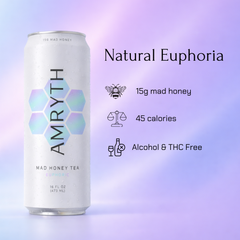


What Is Mad Honey? Discover Nature’s Natural Euphoria
Mad honey is a rare Himalayan honey made from rhododendron nectar. Unlike regular honey, it naturally produces a light, euphoric calm. It’s an ancient ingredient rediscovered for modern social experiences without alcohol.

Here's what sets mad honey apart from everything else:
- Grayanotoxins in mad honey from rhododendron nectar create a mild euphoria without alcohol
- Geographic rarity means only cliffside hives in the Himalayas and Turkey produce authentic mad honey
- Effects last 2-4 hours with gentle mood elevation and enhanced social confidence
- Traditional harvesting involves dangerous cliff climbing, making genuine mad honey extremely scarce
We created Amryth with authentic wild Himalayan mad honey, turning an ancient ingredient into a consistent, euphoric drinking experience.
Curious about mad honey but unsure where to start? You’re not alone. Amryth makes mad honey easy.
Keep reading to learn what authentic mad honey feels like and why the right format matters.
What Makes Mad Honey Different
So what actually makes mad honey different from regular honey? It all comes down to the flowers the bees visit.
Regular honey comes from bees feeding on everyday flowers like clover, wildflowers, or orange blossoms. These create sweet honey with no psychoactive properties whatsoever.
Mad honey only exists when bees feed specifically on rhododendron flowers that contain grayanotoxins. These natural compounds pass from the nectar into the honey, creating effects you'll never get from store-bought varieties.
That’s the standard Amryth starts with.
We use Himalayan mad honey because it’s the most reliable expression of the ingredient. Starting with the right source allows us to create a drink that feels smooth, predictable, and easy to enjoy.
Wellness Benefits of Mad Honey
Beyond its euphoric calm, mad honey has long been associated with broader wellness effects. Here’s what people commonly experience when consuming mad honey:
Improved Sleep Quality
Mad honey is often consumed in the evening because of its relaxing effects. The gentle warmth and calm it creates can make it easier to wind down without the grogginess or sleep disruption associated with alcohol. Many report falling asleep faster and waking up feeling more rested.
Anti-Inflammatory & Antioxidant Properties
Like other raw, unprocessed honeys, mad honey contains naturally occurring antioxidants. In traditional use, it’s been valued for helping the body manage inflammation.
Digestive & Gastrointestinal Support
Raw honey has long been used to support digestion, and mad honey is no exception. In small doses, it’s traditionally associated with easing stomach discomfort and supporting gut balance.
Sexual Health & Vitality
Historically, mad honey has been used as a natural aphrodisiac in several cultures. Its ability to promote sensory awareness may contribute to increased libido and enhanced intimacy.
Blood Pressure & Circulatory Support
Historically, mad honey has been associated with circulation and balance. Rather than feeling stimulating, many people notice a slow, gentle warmth that reflects how it has been used for generations.
Why Geography Determines Everything
Mad honey isn't something you can produce anywhere. It requires specific conditions that only exist in a few places worldwide:
The Himalayas (Nepal, Bhutan)
- Home to Rhododendron ponticum and related species
- High-altitude cliff colonies produce the most potent varieties
- Traditional harvesting methods preserve maximum grayanotoxin content
Turkey's Black Sea Region
- Rhododendron luteum grows wild in mountain forests
- Local beekeepers have harvested mad honey for centuries
- Seasonal availability based on rhododendron blooming cycles
Why Most Honey Will Never Be "Mad"
Commercial honey operations can't produce mad honey even if they wanted to. Here's why:
- Flower diversity dilutes effects
- Commercial bees visit multiple flower types, reducing grayanotoxin concentration
- Rhododendrons are toxic to most bee colonies
- Only wild mountain bees have adapted to process these flowers safely
- Processing destroys compounds
- Heat treatment and filtering remove the very substances that create psychoactive effects
We source our mad honey directly from Himalayan cliff colonies where bees feed exclusively on high-altitude rhododendrons. This ensures maximum potency compared to diluted varieties that barely produce noticeable effects.
Where The Best Mad Honey Comes From
Not all mad honey delivers the same effects. The potency depends entirely on where it's harvested, and most commercial versions you'll find online are diluted disappointments from low-altitude regions.
The most potent mad honey comes from cliffside hives in the Himalayas, where bees feed exclusively on wild rhododendron species that grow above 8,000 feet. These remote locations produce honey with the highest concentrations of grayanotoxins because the rhododendrons contain more of these compounds at higher altitudes.
Why Himalayan Mad Honey Dominates the Market
Traditional harvesters in Nepal and Turkey risk their lives scaling vertical cliff faces to reach these wild hives. The bees build their colonies on sheer rock walls, sometimes hundreds of feet above ground, making collection incredibly dangerous and rare.
Here's what makes location critical for potency:
- Altitude matters: Higher elevation rhododendrons contain more grayanotoxins
- Species variety: Wild mountain rhododendrons produce stronger effects than cultivated lowland varieties
- Seasonal timing: Spring harvests capture peak toxin levels when flowers first bloom
- Isolation factor: Remote hives prevent bees from diluting the honey with other nectar sources
What Mad Honey Actually Feels Like
Most people expect mad honey to hit like alcohol or feel like some mystical wellness trend. Neither is accurate. So, what is mad honey's actual effect? It's more like turning up the brightness on your social interactions without losing any sharpness.
The experience starts subtle.
Within 20-30 minutes, you'll notice a gentle warmth spreading through your body. Not the heavy, dulling sensation of alcohol, but something lighter. Your thoughts stay clear, but conversations flow easier.
The Mental Clarity Difference
Here's where mad honey separates itself from alcohol completely. Instead of dulling your thinking, it seems to open up pathways. Ideas connect faster and you might notice details in conversations you might normally miss.
Social Confidence Without the Crash
The social effects are where mad honey really shines. You know that feeling when you're perfectly buzzed at a dinner party? Engaged, warm, genuinely interested in what people are saying? Mad honey delivers that sweet spot without the inevitable decline.
The Clear Advantages of Professionally Prepared Products
Most alcohol alternatives promise a feeling. Mad honey actually creates one.
Many non-alcoholic drinks rely on functional herbs, adaptogens, or supplements that build slowly or work subtly, if at all. For a lot of people, the effects are easy to miss or feel inconsistent from night to night.
Mad honey works differently. Its effects come from naturally occurring compounds that create a noticeable, physical response in the body. The result is a clear sense of lift, warmth, and ease that doesn’t rely on placebo or branding to be felt.
Amryth makes that difference usable. You feel something, stay clear-headed, and wake up the next day feeling normal.
That’s the gap mad honey fills, and why it stands apart from the rest of the category.
Experience Mad Honey Today

Amryth is mad honey, made drinkable.
We use authentic wild Himalayan mad honey as the active ingredient, crafted into a smooth, consistent drinking experience meant to be shared.
It’s something you can actually bring to a dinner, a party, or a night out without overthinking it. You feel the effects, stay present, and keep your rhythm.
Shop Amryth and feel the difference.