

Where Does Mad Honey Come From?
Mad honey comes from high-altitude regions like the Himalayas, where bees collect nectar from specific rhododendron flowers. These flowers contain natural compounds called grayanotoxins, which give mad honey its unique euphoric effects and rarity.

The experience comes down to a few variables:
- Altitude matters. The honey that actually delivers comes from above 8,000 feet, where the nectar is naturally more concentrated.
- Bee species matters. Giant Himalayan bees produce a very different honey than standard bees, especially at elevation.
- Flower type matters. Only certain high-altitude rhododendrons contain enough of the active compounds to make a difference.
- Handling matters. Dilution, blending, or heavy processing smooths out what makes mad honey distinctive in the first place.
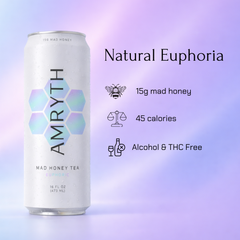
That’s the advantage Amryth is built on. We start with wild mad honey sourced directly from traditional Himalayan cliff harvesters, then deliver it in a pre-dosed beverage that keeps the experience consistent and easy to enjoy.
It’s authentic mad honey, handled with intention.
Keep reading to see where authentic mad honey actually comes from, how to spot good sourcing, and what makes Himalayan honey different.
The Psychoactive Honey from Giant Himalayan Bees
Authentic mad honey comes from sheer cliff faces in the Himalayas and parts of Turkey, where giant Apis laboriosa bees harvest nectar from specific rhododendron flowers that only grow at extreme elevations. These are not backyard bees or farmed hives. They live and work where few species can survive.
The effects come from grayanotoxins, naturally occurring compounds found in those rhododendron flowers. When the bees collect nectar at elevations above 8,000 feet, those compounds become concentrated into a honey known for its psychoactive effects.
Why Only Giant Bees Produce Real Mad Honey
Apis laboriosa is the largest honeybee species in the world, and it operates in conditions other bees simply can’t handle. These bees:
- Thrive at extreme altitudes where potent rhododendrons grow
- Process grayanotoxin-rich nectar without harm
- Build massive hives on vertical cliff faces
- Produce honey with naturally concentrated potency
Standard honeybees can’t survive these elevations or work with this nectar.
The Himalayan Mountains: World's Primary Mad Honey Source
Himalayan origin alone isn’t enough. Authentic mad honey comes from a very specific elevation where the environment produces the effects it’s known for.
Cliffside Hives Above 8,000 Feet
In Nepal, Gurung honey hunters climb sheer cliffs above 8,000 feet to reach massive hives built directly onto the rock face.
At these elevations, the bees have access to specific rhododendron species that don’t grow below the alpine zone. Two in particular matter most:
- Rhododendron ponticum
- Rhododendron luteum
These plants naturally contain higher concentrations of grayanotoxins, the compounds responsible for mad honey’s distinct effects.
Why Himalayan Mad Honey Is Different
A few factors separate true Himalayan mad honey from everything else labeled the same way:
- Altitude isolation: Above 8,000 feet, nectar sources are limited, so bees rely heavily on grayanotoxin-rich rhododendrons
- Seasonal harvests: Collection only happens during short bloom windows when potency peaks
- Bee species: Apis laboriosa produces honey with significantly higher active compound concentration than standard honeybees
Lower-elevation honey may contain trace compounds, but it doesn’t deliver the experience mad honey is known for.
That’s why sourcing matters. Environment, elevation, and species all have to line up for mad honey to be the real thing.
Traditional Gurung Harvesting in Lamjung and Kaski Districts
Some of the most respected mad honey comes from a handful of districts in Nepal where harvesting has stayed largely unchanged for generations. Lamjung and Kaski are two of those places, known for their altitude, terrain, and the way the honey is collected.
In these regions, the Gurung people continue traditional cliffside harvesting methods that prioritize timing, selectivity, and minimal handling.
Key parts of that process include:
- Seasonal harvests: Collection happens only during short windows in spring and autumn, when rhododendron nectar is most concentrated.
- Selective combs: Harvesters take only the darker, amber sections of honeycomb, where the active compounds naturally concentrate.
- Minimal processing: Fresh honey is lightly filtered using bamboo strainers, preserving its natural character and potency.
Our mad honey comes straight from Gurung harvesters in Lamjung, collected at elevation and handled with care.
Turkey’s Black Sea Coast: A Secondary Source
Turkey’s Black Sea region is the second most established origin of mad honey, with documented use going back more than 2,000 years.
Areas around Trabzon and Artvin have long harvested honey produced when bees feed on Rhododendron ponticum.
This tradition is deeply rooted but the quality difference comes down to environment.
Compared to the Himalayas, the Black Sea region sits at lower elevations with a milder climate and a wider range of flowering plants.
Bees forage from more diverse nectar sources, which results in a gentler concentration of active compounds.
The result is a milder style of mad honey, shaped by geography, climate, and foraging patterns.
Sourcing Red Flags
Mad honey is regional by nature. Where it comes from matters, and not everything sold under the name reflects the places that built its reputation. Authentic mad honey comes from very specific high-altitude regions, and knowing the origin separates the real experience from standard honey with better branding.
Geographic Origin
Legitimate producers are clear about where their honey comes from. Vague sourcing is usually a tell. Things to question include:
- “Sourced from Asia” without naming a specific region
- Generic “Himalayan” claims with no mention of Nepal, Turkey, or exact valleys
- No reference to traditional harvesting areas or communities
It’s also worth being skeptical of honey claiming to come from:
- Low-altitude regions below 6,000 feet
- Areas without native rhododendron forests
- Countries with no documented mad honey history
- Regions where mad-honey-producing bee species don’t naturally occur
Clear sourcing matters. When the origin is specific, the experience is consistent. Vague claims usually lead to unpredictable results.
Why Most “Mad Honey” Isn’t From the Real Sources
Most products sold as mad honey don’t come from the regions that made it known in the first place. Authentic mad honey comes from a narrow set of high-altitude environments, but much of what’s on the market is sourced elsewhere and labeled loosely.
How That Happens
A few common patterns show up again and again:
- Rebranded origins: Honey from Turkey’s Black Sea region is often marketed as Himalayan, despite coming from a different environment.
- Lower elevations: Some products are harvested below 6,000 feet, where active compounds are naturally less concentrated.
- Blended batches: Genuine mad honey is sometimes mixed with regular honey to stretch supply and lower costs.
Why Authentic Mad Honey Is Rare
Authentic mad honey is limited by nature. It’s harvested only a few times a year, at elevation, from places that can’t be scaled up or rushed.
That’s why sourcing matters. Working directly with high-altitude Himalayan harvesters and controlling the dose is what keeps the experience consistent and true to its origin.
If a product is cheap, always available, and vague about where it comes from, it’s probably not coming from the places that built mad honey’s reputation.
Experience Authentic Mad Honey

Not all mad honey is created equal. The real thing comes from specific high-altitude regions and traditional harvesting methods that give it the character and effects it’s known for. Without that environment, what you’re left with is usually just honey with a story attached.
Amryth is built around the real source. We use wild mad honey harvested from traditional Himalayan cliff regions, paired with complementary botanicals to create a smooth experience with light buzz.
Try Amryth and experience mad honey the way it’s meant to feel. Thoughtful, balanced, and perfectly timed for real life.